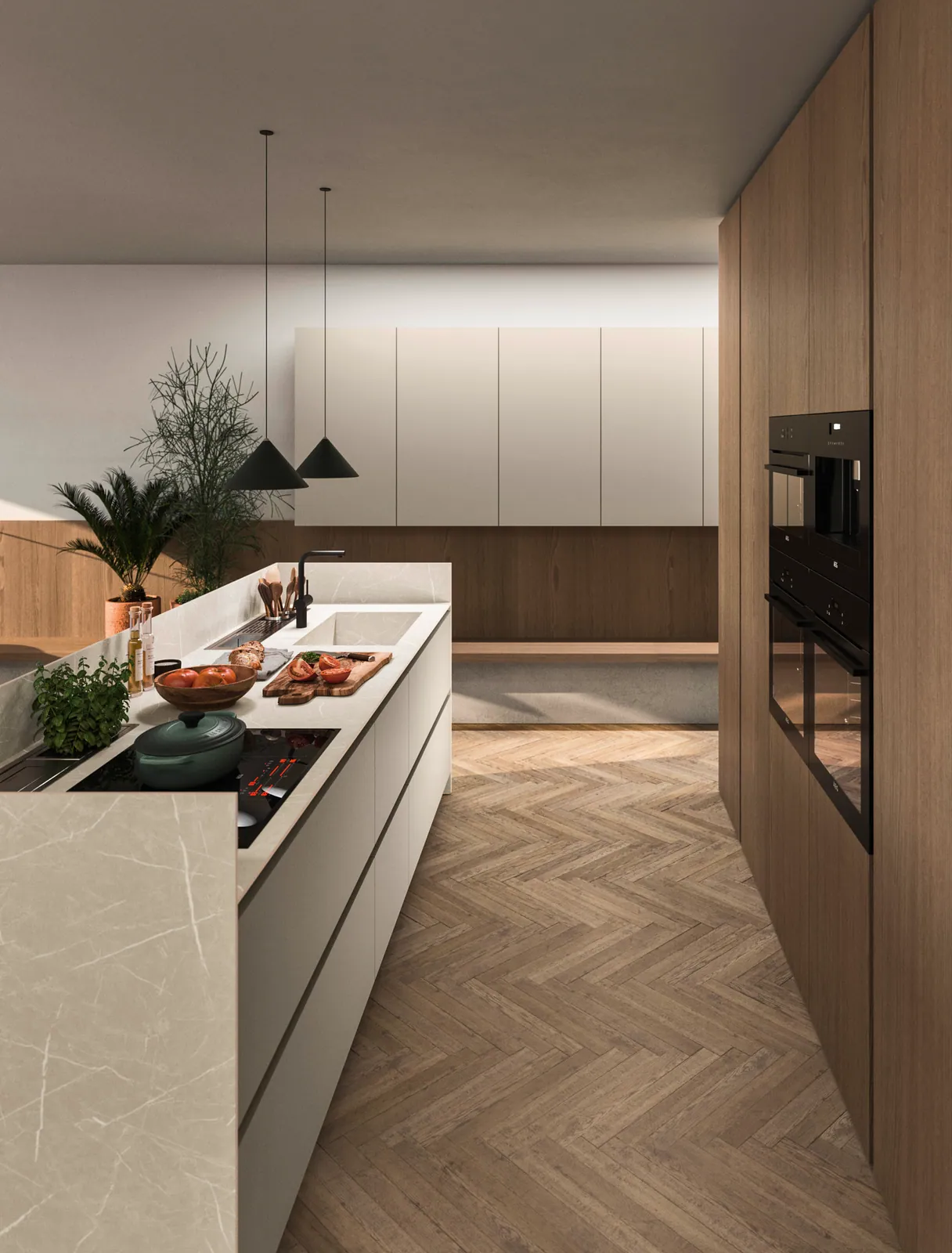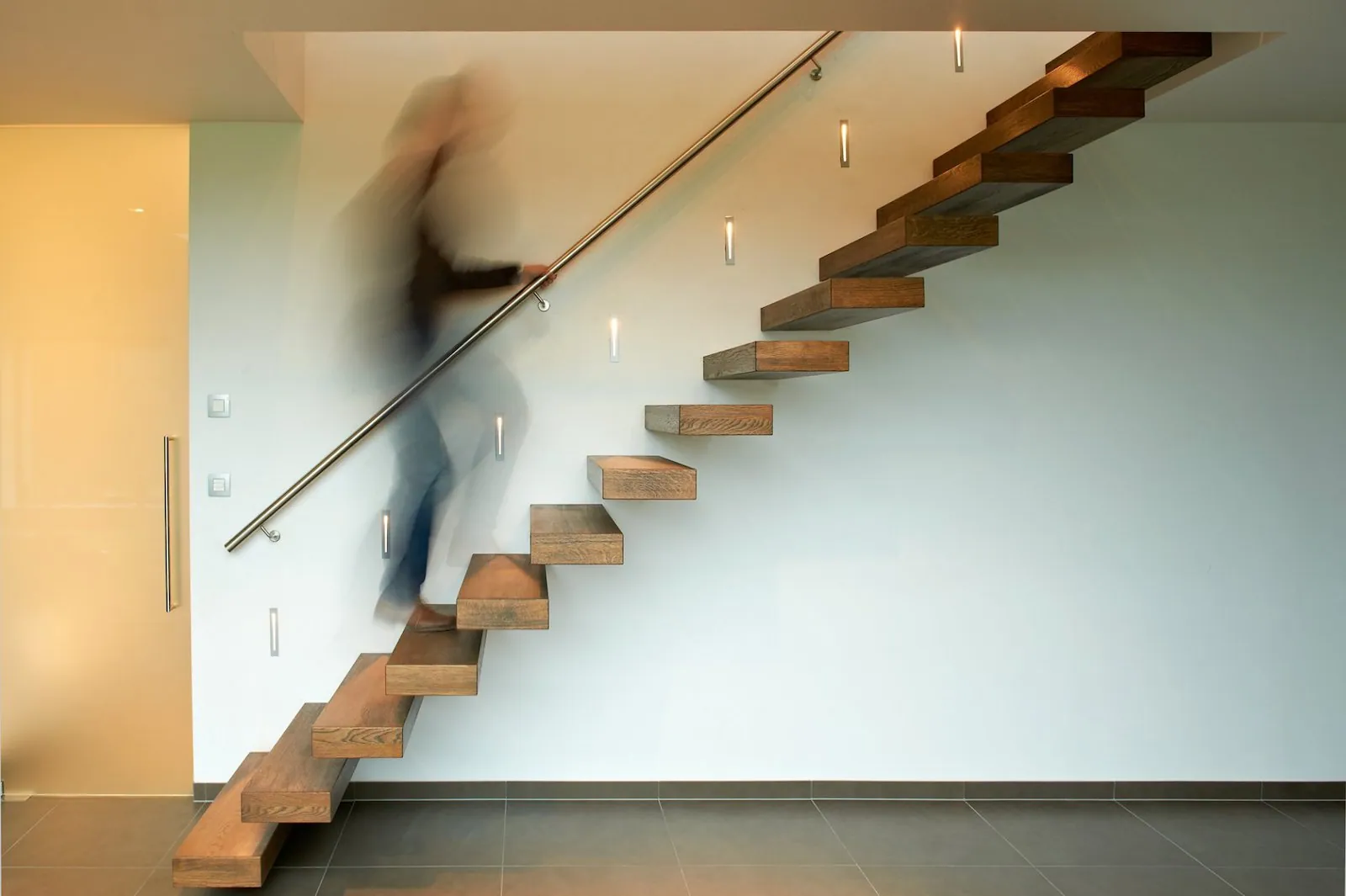
There are materials that harden with time, and others that come into their own. Oak belongs to the second category, and that is why it moves through the trends without ever looking dated.
In a kitchen or on a staircase, solid wood is exposed to life: the light, the hands, the humidity, the seasons. Where a veneer eventually tires, solid oak takes on a patina. Its tone gains nuance, its grain reveals itself, and the object gains in presence what it loses in newness.
Choosing the right cut
Everything begins before the workshop, at the moment the log and the cut are chosen. Depending on whether the wood is flat-sawn, quarter-sawn or rift-sawn, the grain tells a different story, calmer and more linear, or livelier and more flamed.
For horizontal surfaces and steps, we favour stable cuts that move little and stand up to daily use. For fronts, the drawing of the grain comes first: we look for continuity from one panel to the next, like a book being opened.
« Wood is not a material you simply install. It is a material you listen to. »
The finish makes the material
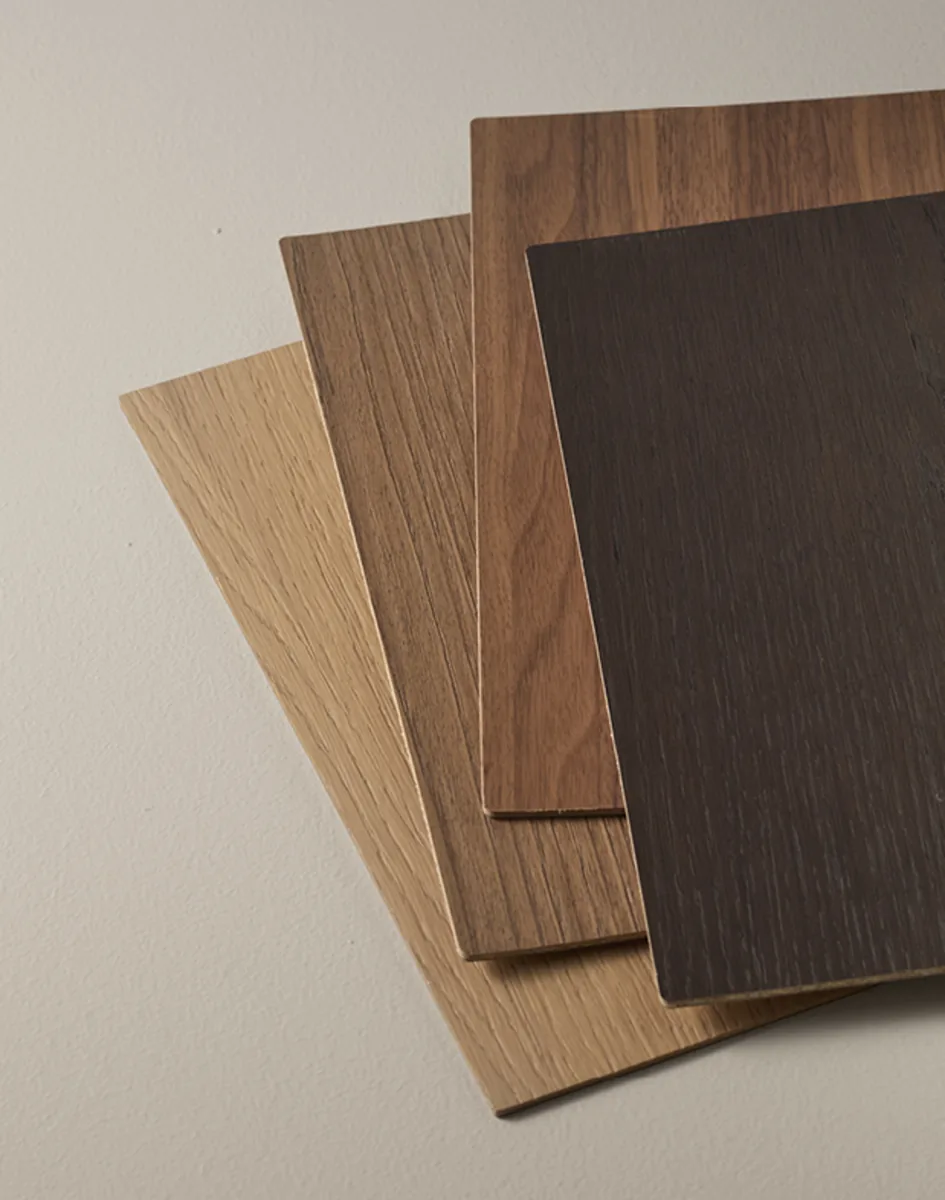
The same oak can look warm and raw or light and contemporary depending on its finish. We work mainly with oil and matte varnish, two families that let the feel of the wood come through.
- Oil penetrates the fibre and nourishes the wood deep down. The result is natural, matte, pleasant to the touch, and can be repaired locally.
- Matte varnish forms a more protective film, ideal for heavily used worktops, while keeping a sober, non-glossy look.
Maintenance without thinking about it
Well-finished oak asks for almost nothing: a soft cloth, a neutral cleaner, and a maintenance oil once or twice a year for the most exposed surfaces. Over the years, that simple gesture becomes a ritual, the ritual of a home that is cared for.
That is the whole promise of bespoke solid wood: an object that never goes out of fashion, because it never tried to be fashionable. It simply sought to last.