A successful door goes unnoticed. It opens effortlessly, closes in silence, and at rest it merges with the wall or underlines it with a clean line. This result rarely comes down to the leaf alone. It comes down to the frame: the surround, the junction with the wall, the precision of the masonry opening.
In a renovation as in a new build, the door is one of the last items decided upon, often in a hurry. That is a shame, because it is also one of the most visible, at eye level, several times a day. Before talking about finish or handle, you therefore need to choose a frame approach. Everything else follows from it.
The frame, the first decision
Two families exist, and they tell two different intentions.
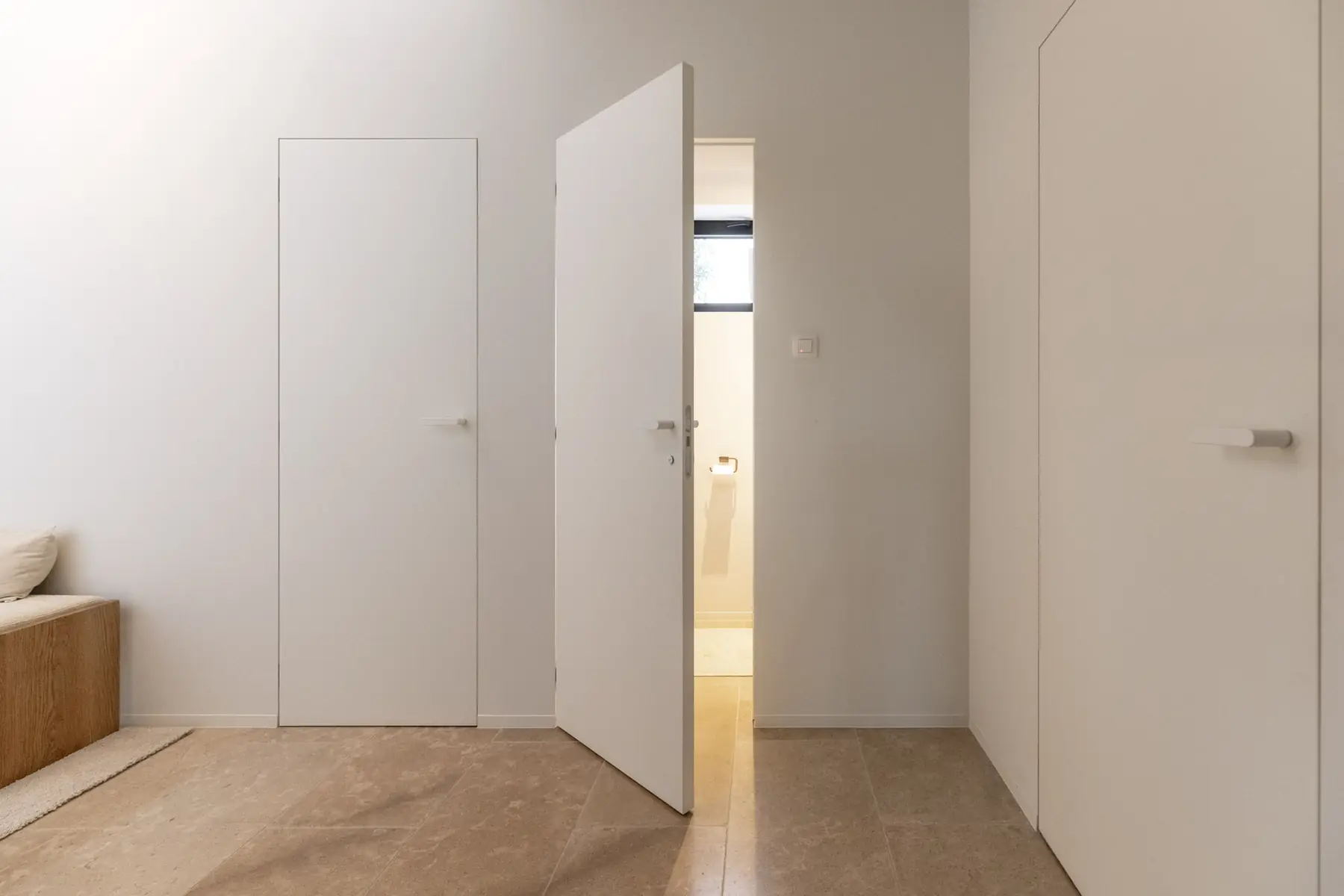
The flush frame, also called the concealed frame, is set flush with the wall. No projecting architrave, no moulding: the frame is sunk into the partition and the door sits flush with the wall face. At rest, painted the same tone as the wall, it almost disappears. It is the choice of interiors that seek visual calm, where you want the eye to glide without catching on anything. The trade-off is demanding: this type of frame is prepared from the shell stage, the opening must be set to the millimetre, and the plaster must die cleanly against the frame.
The visible frame, for its part, embraces the surround. A surround is drawn, sometimes in slight relief, sometimes in a contrasting shade, and the door becomes a compositional element in its own right. Well judged, this line structures a room and gives rhythm to a corridor. It is a more classic choice, easier to integrate into an existing home, and just as refined when the execution follows.
When the door becomes a gesture
Beyond these two families, some doors change the way a space reads. They call for a little more thought upstream, but the result is felt immediately.
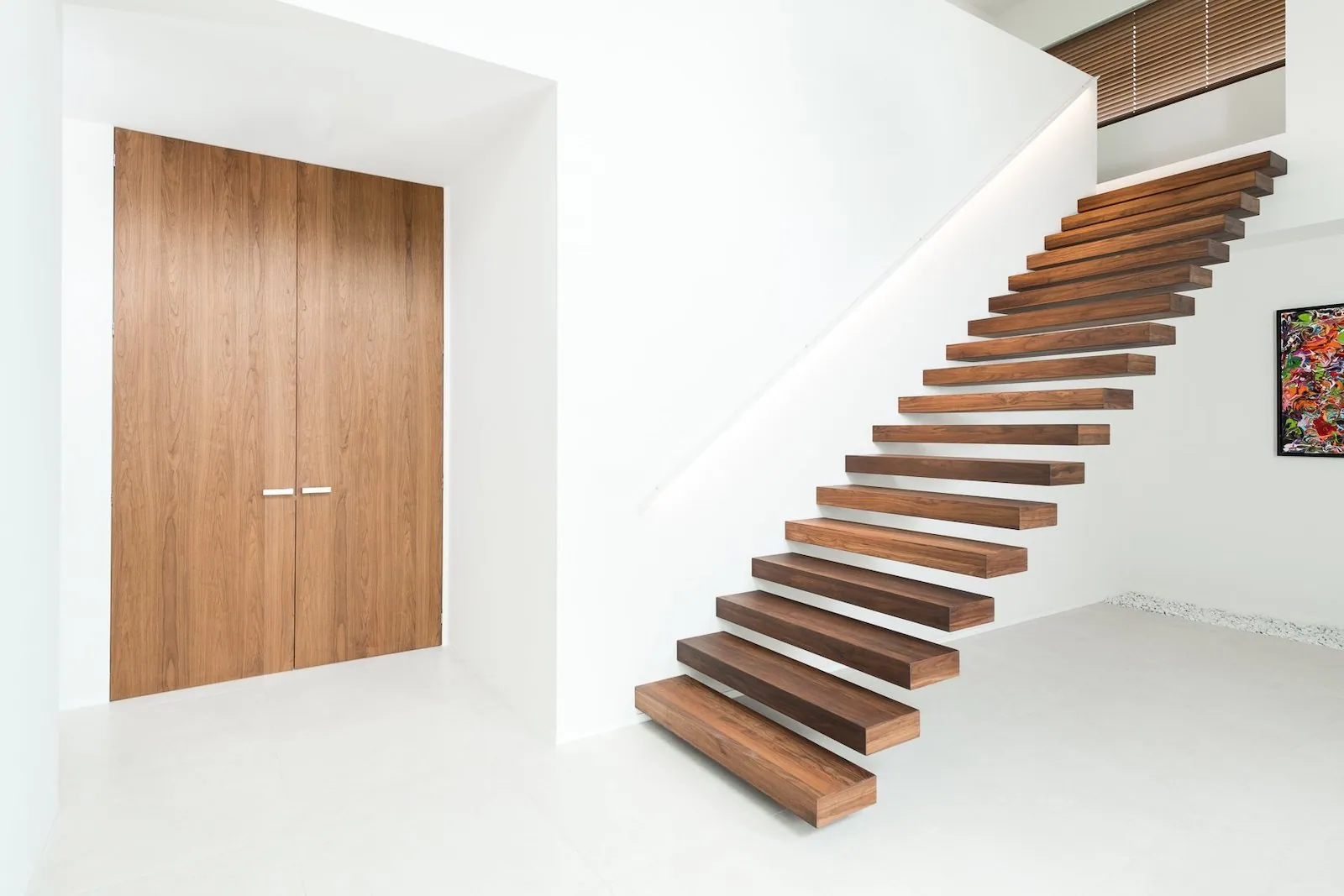
- Full height. From floor to ceiling, with no transom or top rail. The door follows the height of the room and the perspectives become clean, with no break above the leaf. It is one of the simplest ways to make a space feel larger.
- Pivot. The axis is set towards the inside of the leaf rather than at the edge. This mechanism allows for great widths, where a conventional hinge would struggle, and gives the opening a broad, measured movement. Ideal for an entrance or a passage you want to feel generous.
- Steel-framed glazed door. Fine steel profiles and clear glass, in the workshop spirit. It separates without partitioning and lets the light pass from one room to the next. Perfect for closing off an open kitchen or a study without darkening the rest.
- Door ready to paint. Delivered ready to receive its final shade, it merges with the exact tone of the wall or dares a bold colour. It is the most flexible solution when the decoration is not yet settled.
« A door that closes in silence, without slamming or dragging, is a whole matter of adjustment. The client does not see it. They feel it with every passage. »
Finishes, handles and details you feel
The finish continues the frame approach. A wood or a veneer brings material and grain, especially on a full-height door where the surface is large. A matte lacquer, in black, white or colour, gives a door that is uniform and deep and does not bounce the light back. Glass, finally, lightens a door and lets it converse with a neighbouring glazed screen.
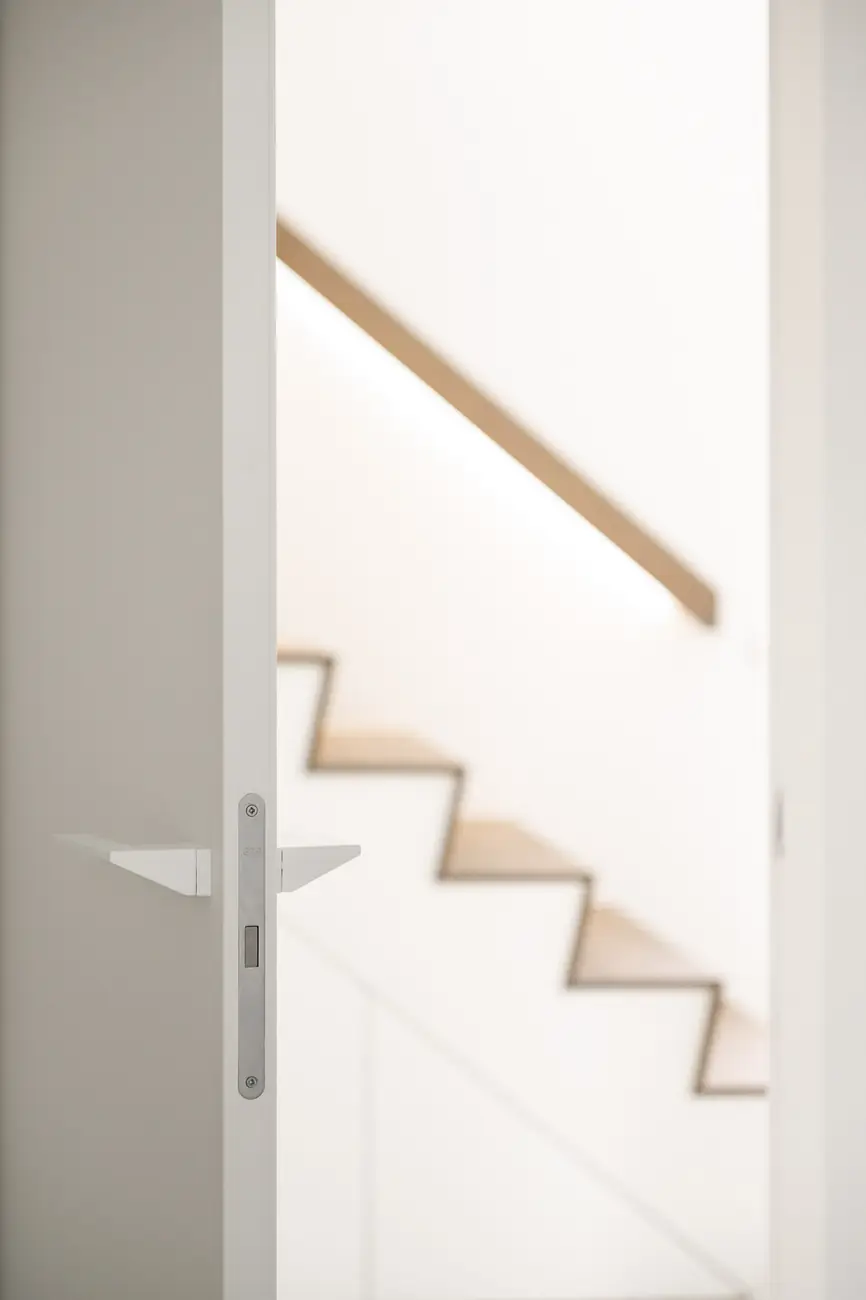
The handle chooses between two styles. Recessed, milled into the edge of the leaf, it disappears and serves the flush frame. Surface-mounted, it is an object you choose for its grip and its design, in metal or stainless steel, the way you choose a piece of furniture hardware.
What makes a door ring true
The rest is decided in the workshop and on site, in things you do not see. The masonry opening measured to the millimetre, so that the gap around the leaf stays even all the way round. The concealed hinges, which erase any visible hardware. The soft closing, which cushions the last centimetre and removes the slam. And, above all, the direction of opening: towards which room, against which wall, without obstructing the passage or a piece of furniture. A poorly oriented door remains a daily nuisance, however beautifully finished it is.
It is this invisible part that sets a door that has simply been fitted apart from a door that seems to have always been there. At ODEA Interior, every door is drawn and made to measure, designed together with its frame and the room it serves, before being adjusted by hand once fitted. The best way to judge it remains to come and open and close it yourself, at the Beersel showroom.